

1921 – German City of Kerne Notgeld 50 Pfennig
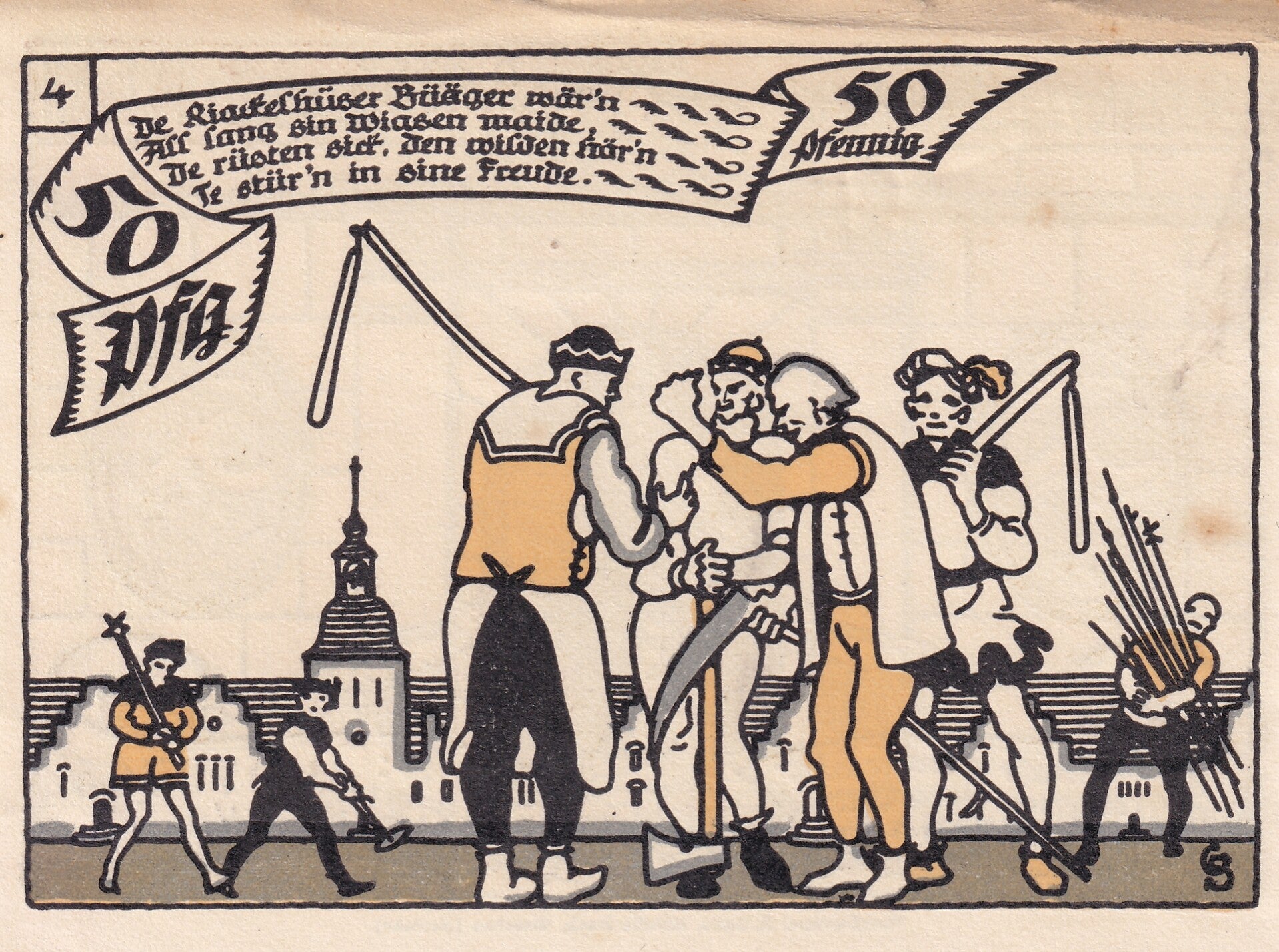
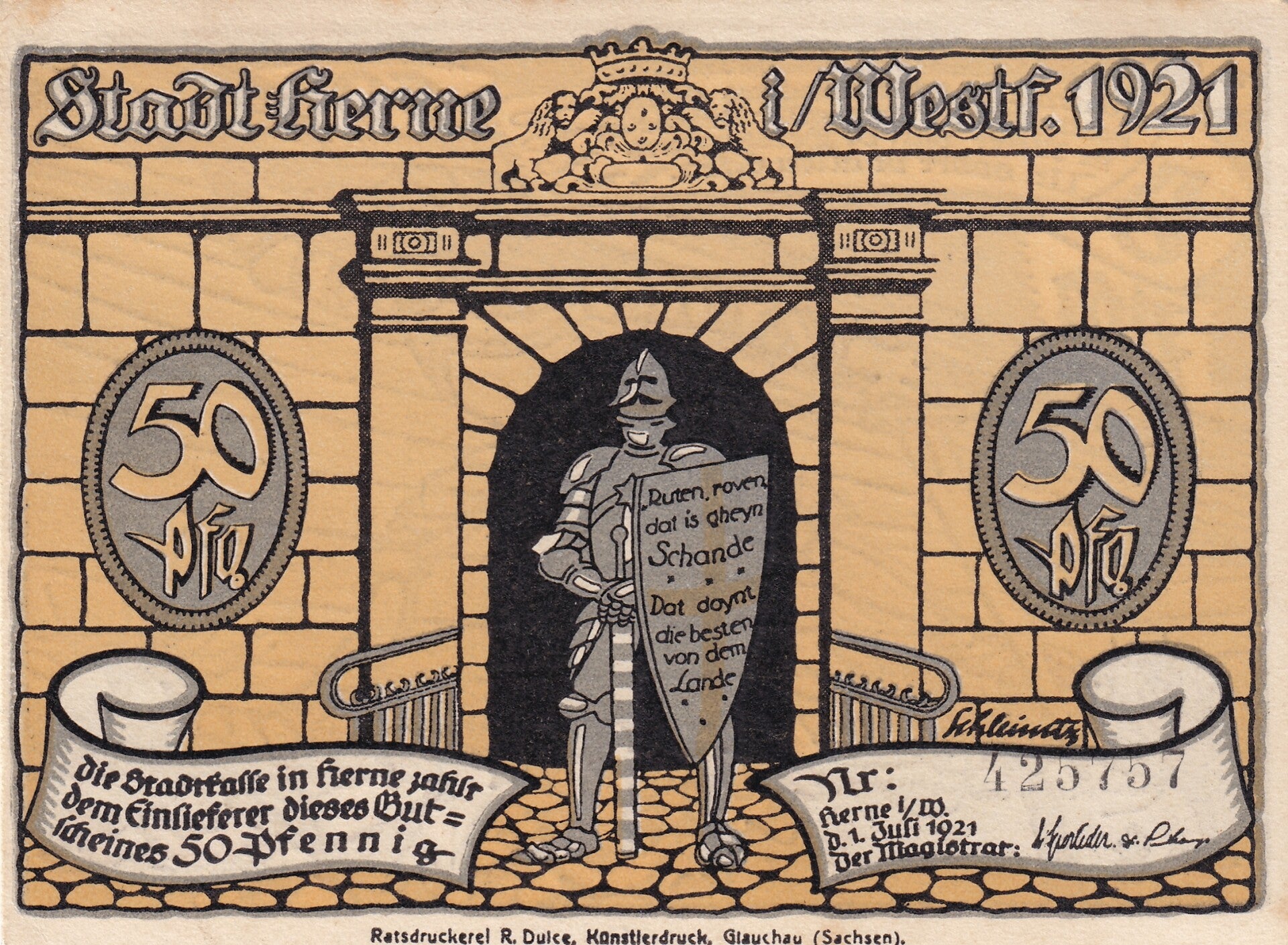
1921 German Notgeld 50 Pfennig note was issued by the City of Kerne (Stadt Kerne) during the turbulent post–World War I period, when widespread coin shortages forced German towns and municipalities to create their own emergency money (Notgeld). Dated 1. Westf. 1921, this piece reflects the economic instability of the early Weimar Republic and the ingenuity of local governments in maintaining everyday commerce.
The front design features a lively illustrated scene of townspeople engaged in traditional labor and rural activity, symbolizing cooperation, craftsmanship, and community resilience. A decorative banner across the top displays a poetic German inscription, adding cultural and artistic depth to the note. The denomination “50 Pfennig” is prominently shown, making it instantly recognizable to collectors.
The reverse side presents a striking medieval knight standing within a fortified stone gate, holding a shield inscribed with a moralizing German proverb. This imagery reflects themes of honor, integrity, and civic pride—common motifs in German Notgeld artwork. Ornamental scrollwork, architectural details, and the issuing authority’s text enhance the overall visual appeal. Serial numbering and official validation further authenticate the piece as a legitimate municipal issue.
Printed by Ratsdruckerei R. Dulce, Glauchau (Sachsen), this note exemplifies the high-quality artistic printing typical of collectible German emergency currency. Its limited circulation and strong visual storytelling make it an excellent addition to collections focused on Weimar-era currency, German hyperinflation, or illustrated world banknotes.