

1921 – German City of Kerne Notgeld 50 Pfennig
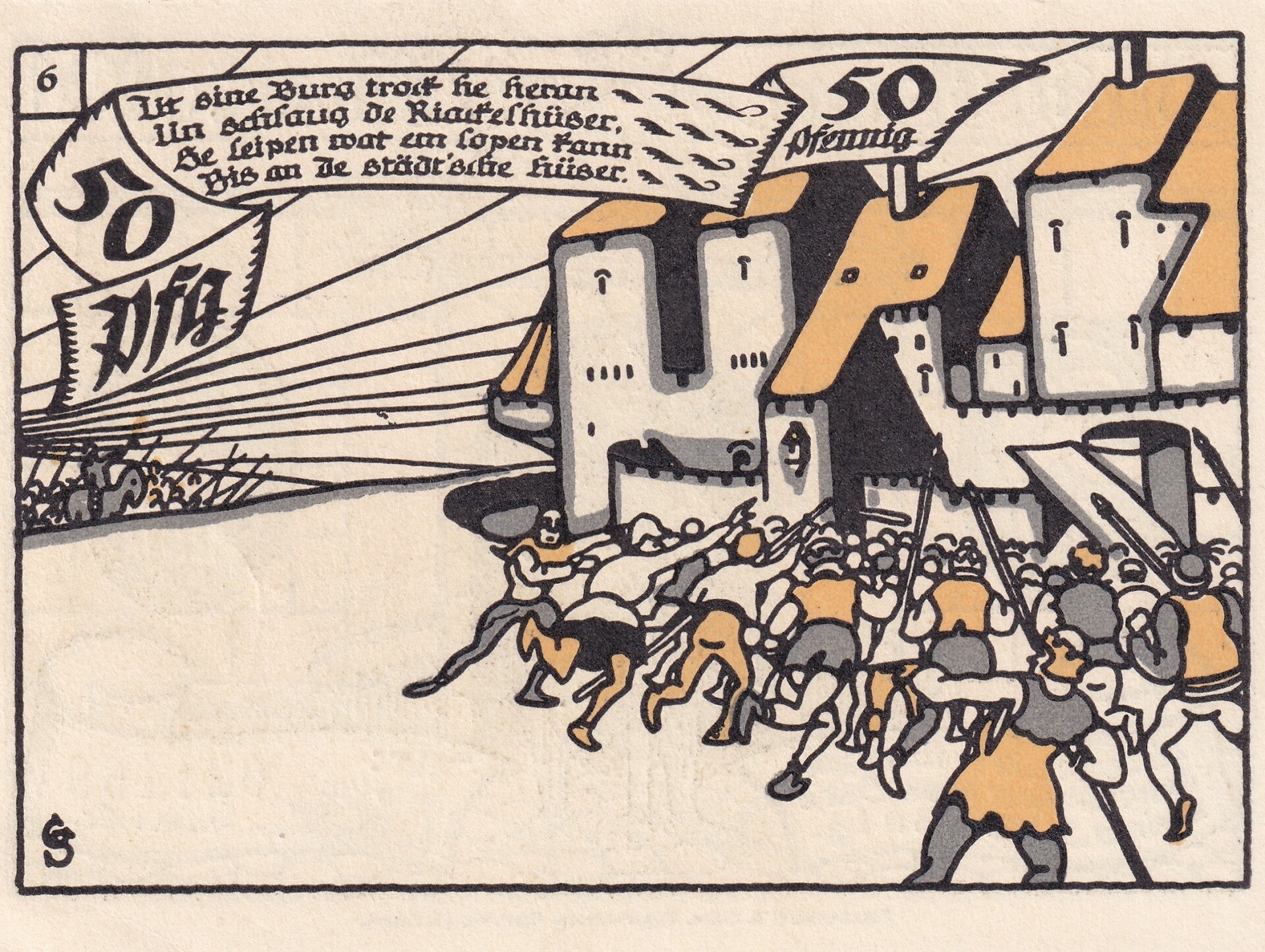
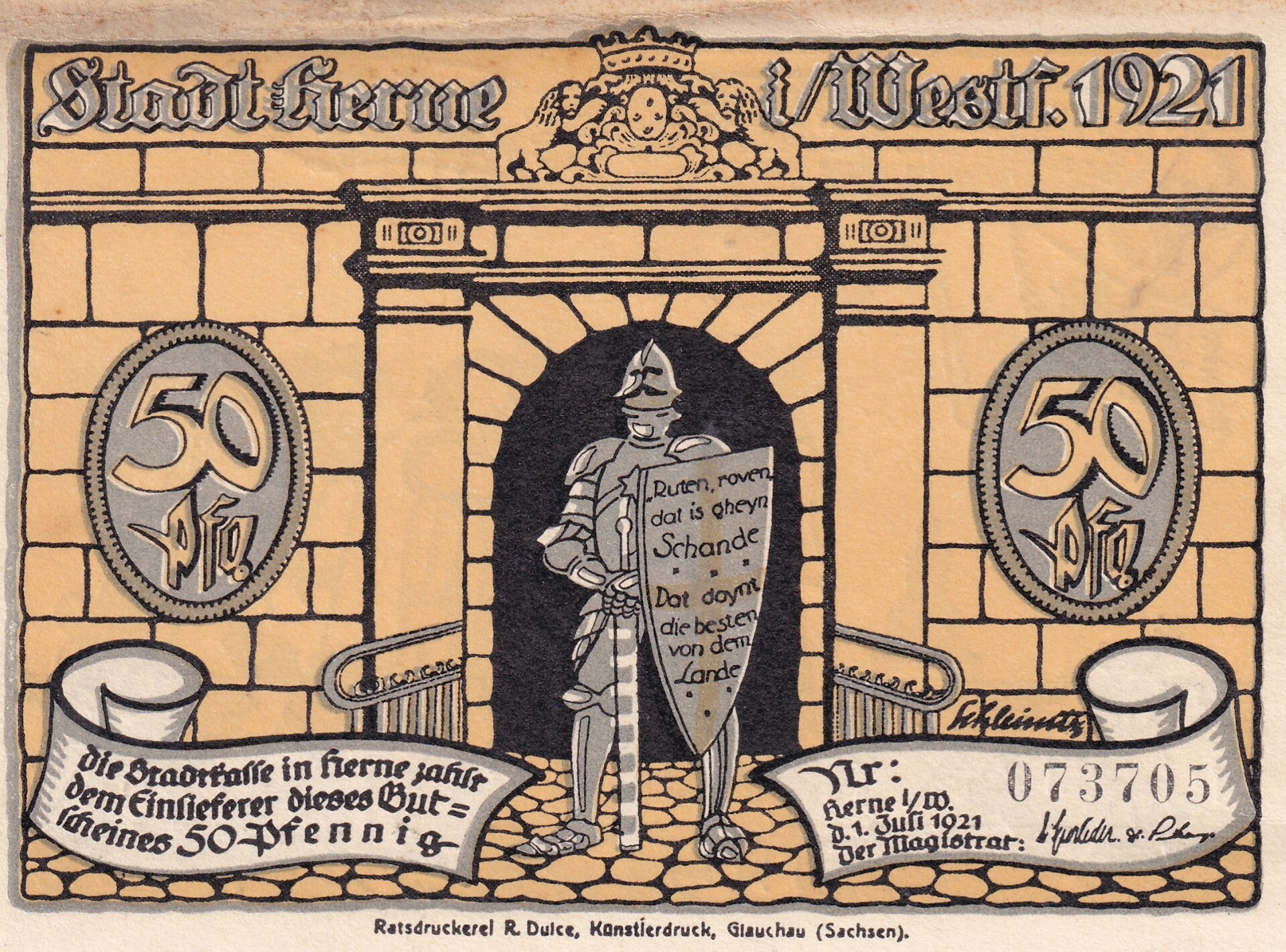
1921 German Notgeld 50 Pfennig note was issued by the City of Kerne (Stadt Kerne), Westphalia, during the severe coin shortages that followed World War I. As part of Germany’s emergency money (Notgeld) system, this note helped sustain local trade at a time when official Reich coinage was scarce or unavailable.
The illustrated front depicts a dramatic medieval siege scene, with townspeople forcefully defending or storming a fortified castle. Strong diagonal lines, flowing banners, and stylized figures convey motion, urgency, and collective effort—symbolic of civic struggle and resilience. The denomination “50 Pfennig” is boldly integrated into the design, accompanied by a poetic German inscription that adds narrative and cultural depth.
The reverse design showcases a heavily armored medieval knight standing within a stone city gate, holding a shield inscribed with a moralizing proverb in regional dialect. This imagery emphasizes honor, accountability, and civic responsibility—recurring themes in German Notgeld art. Architectural details, decorative brickwork, and balanced oval denomination panels enhance the visual symmetry and appeal.
Dated 1. Westf. 1921, the note includes official authorization text, serial numbering, and printing credit to Ratsdruckerei R. Dulce, Glauchau (Sachsen), a well-known printer of high-quality municipal emergency currency. The muted palette of tan, black, and grey further reflects the classic Weimar-era Notgeld aesthetic.