

1921 – German City of Kerne Notgeld 50 Pfennig
1921 German Notgeld 50 Pfennig note was issued by the City of Kerne (Stadt Kerne), Westphalia, during the severe post–World War I shortage of official coinage in Germany. To keep everyday commerce functioning, municipalities authorized Notgeld (emergency money)—often transforming necessity into highly artistic and collectible paper currency.
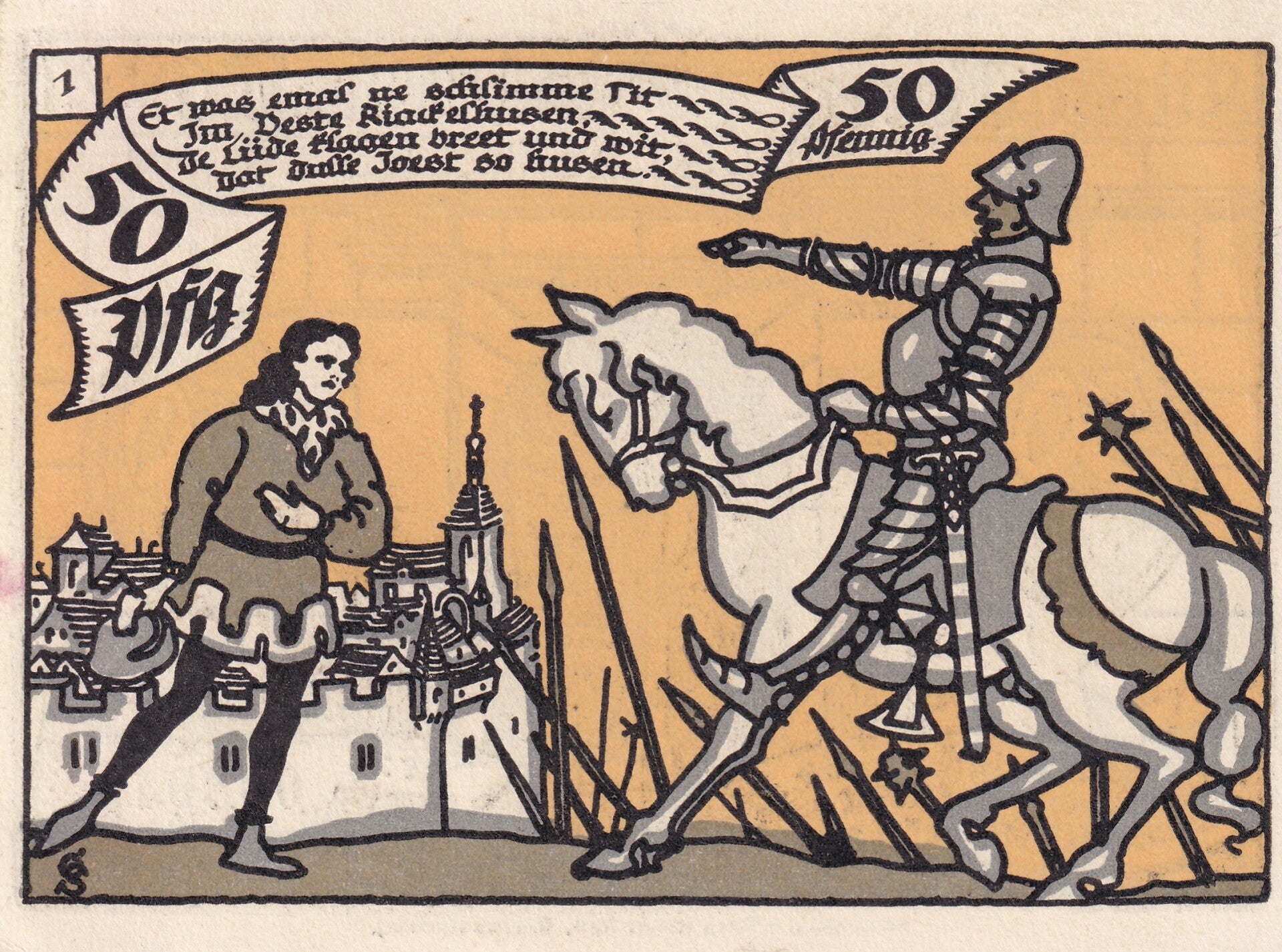
The front illustration depicts a dramatic medieval scene featuring an armored knight mounted on horseback, forcefully gesturing toward a townsman standing before a walled city. Flowing banners display poetic German text, while the 50 Pfennig denomination is boldly integrated into the design. The composition evokes authority, justice, and civic order, drawing on medieval symbolism to communicate moral and social themes relevant to the issuing community.
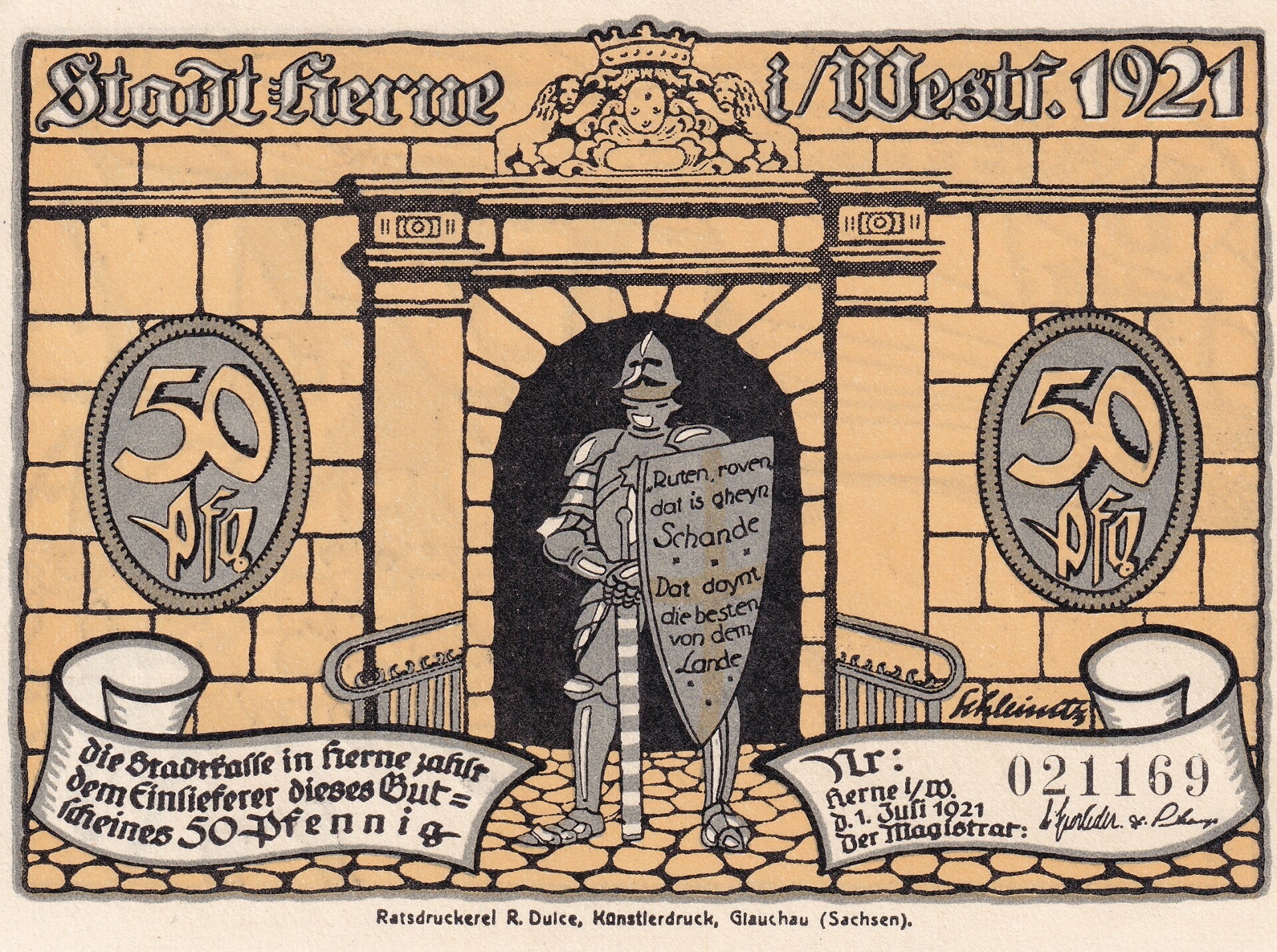
The reverse design showcases a fully armored knight standing within a fortified stone city gate, holding a shield inscribed with a proverb written in regional dialect. The message emphasizes integrity, accountability, and civic pride—recurring motifs in German Notgeld artwork. Symmetrical oval denomination panels, architectural brick detailing, and balanced scrollwork contribute to the note’s strong visual structure.
Dated 1. Westf. 1921, the note includes official authorization text, serial numbering, and printer attribution to Ratsdruckerei R. Dulce, Glauchau (Sachsen), a respected printer known for producing high-quality municipal emergency currency. The warm tan paper with black and grey ink is characteristic of classic Weimar-era Notgeld issues.
Highly collectible for its storytelling artwork, regional history, and limited circulation, this Kerne 50 Pfennig Notgeld is an excellent addition to collections focused on German Notgeld, Weimar Republic currency, hyperinflation-era paper money, or illustrated world banknotes.