

1921 – German City of Kerne Notgeld 50 Pfennig
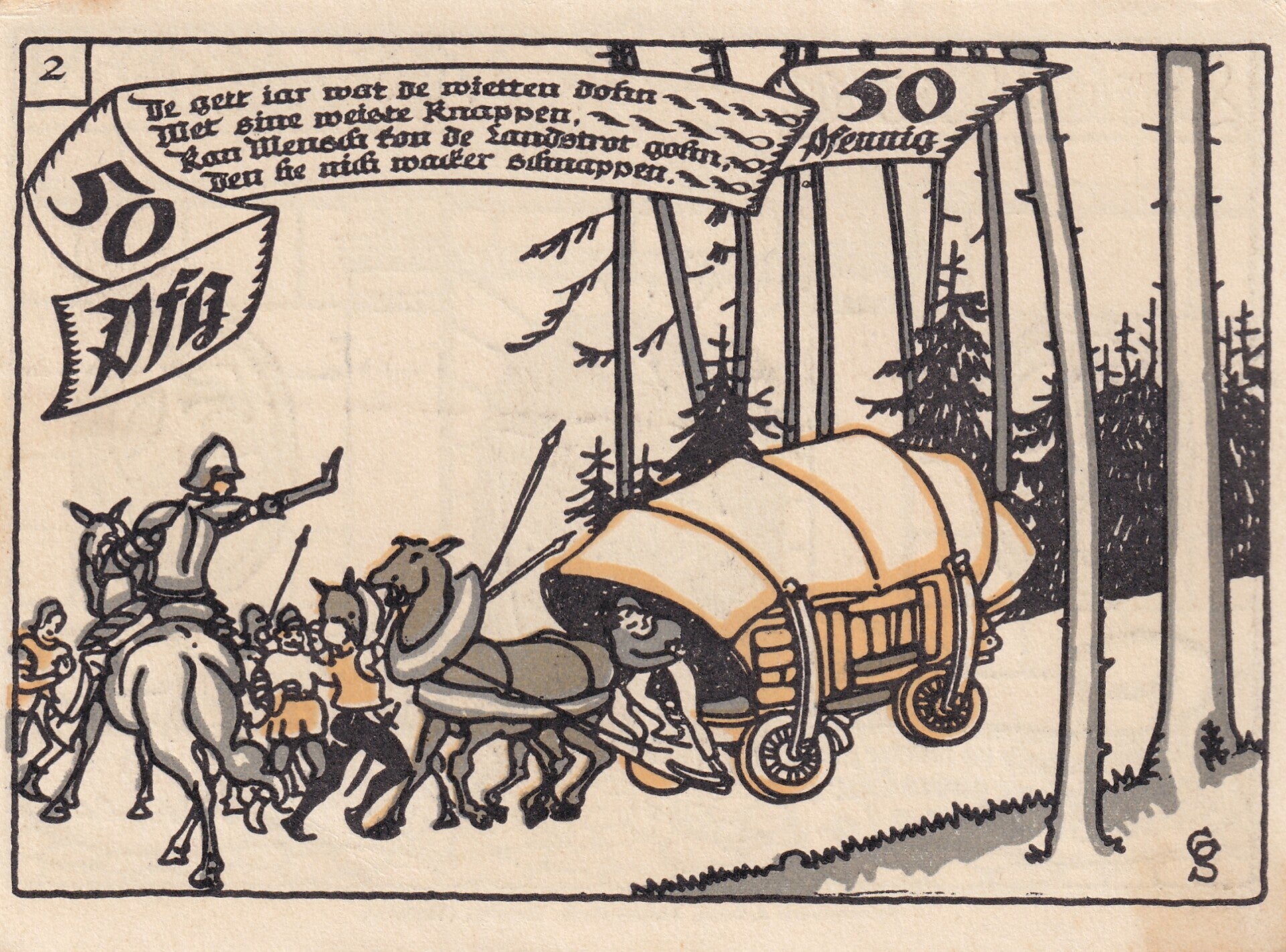
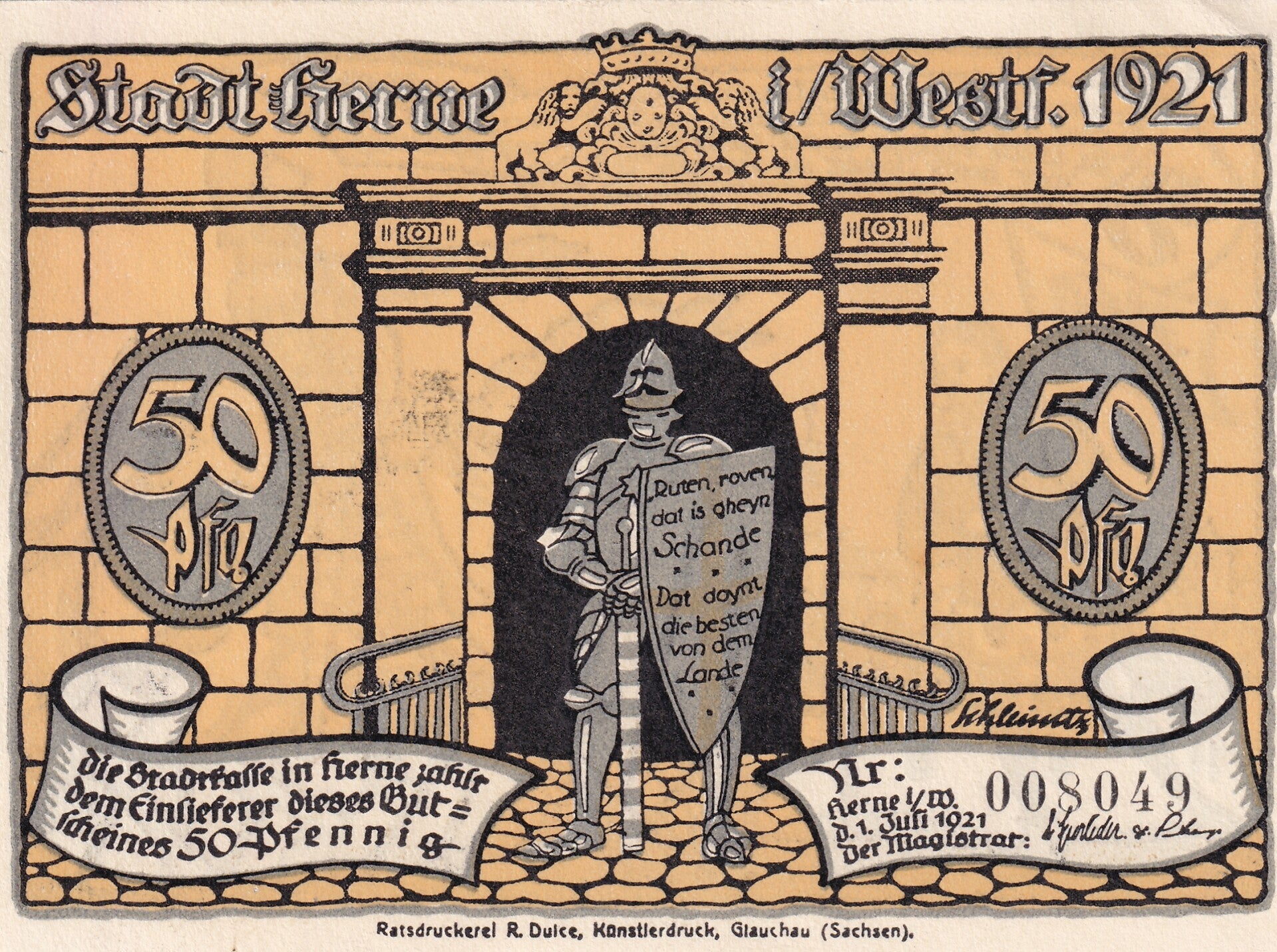
1921 German Notgeld 50 Pfennig note was issued by the City of Kerne (Stadt Kerne), Westphalia, during the post–World War I currency crisis when severe shortages of official Reich coinage forced local governments to produce Notgeld (emergency money) for everyday transactions. These issues are now prized for their storytelling artwork and strong regional identity.
The front illustration depicts a vivid medieval-style scene showing an armed escort guiding a covered wagon through a dense forest. Figures on horseback and on foot move with urgency, symbolizing protection of goods, trade routes, and communal resources. The flowing banner at the top contains a poetic German inscription, while the 50 Pfennig denomination is prominently displayed, seamlessly integrated into the narrative design. The imagery conveys movement, cooperation, and the challenges of transport and commerce—paralleling the economic hardships of early 1920s Germany.
The reverse design features a fully armored knight standing within a fortified city gate, holding a shield inscribed with a proverb written in regional dialect. This powerful symbol reinforces themes of honor, responsibility, and civic pride. Balanced oval denomination panels, detailed brickwork, and decorative scrolls frame the central figure, giving the note a harmonious and architectural composition.
Dated 1. Westf. 1921, the note includes official authorization text, serial numbering, and printer credit to Ratsdruckerei R. Dulce, Glauchau (Sachsen)—a well-known printer of high-quality municipal emergency currency. The warm tan paper with black and grey ink is characteristic of classic Weimar-era Notgeld production.