

1921 – German City of Kerne Notgeld 50 Pfennig
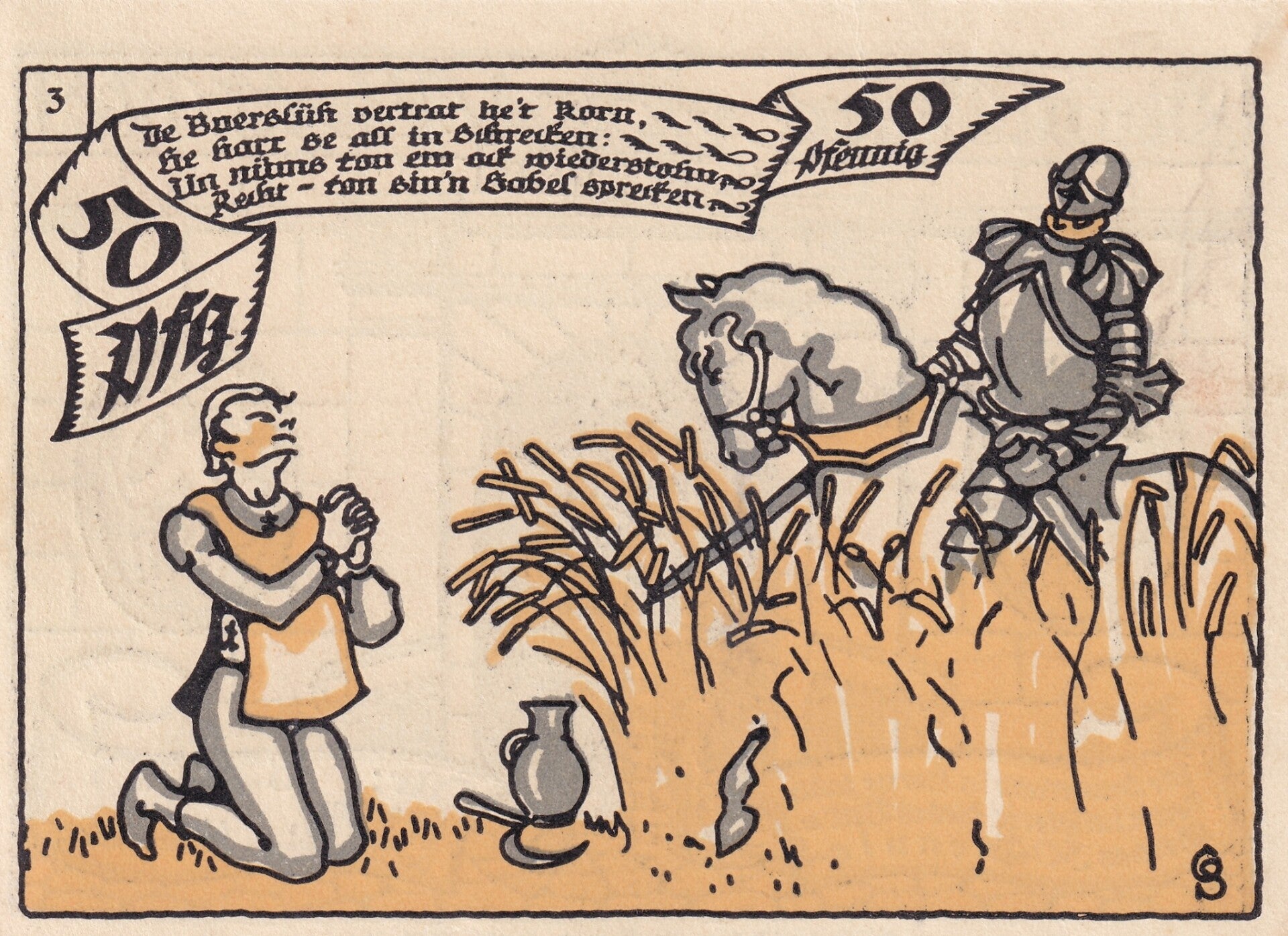
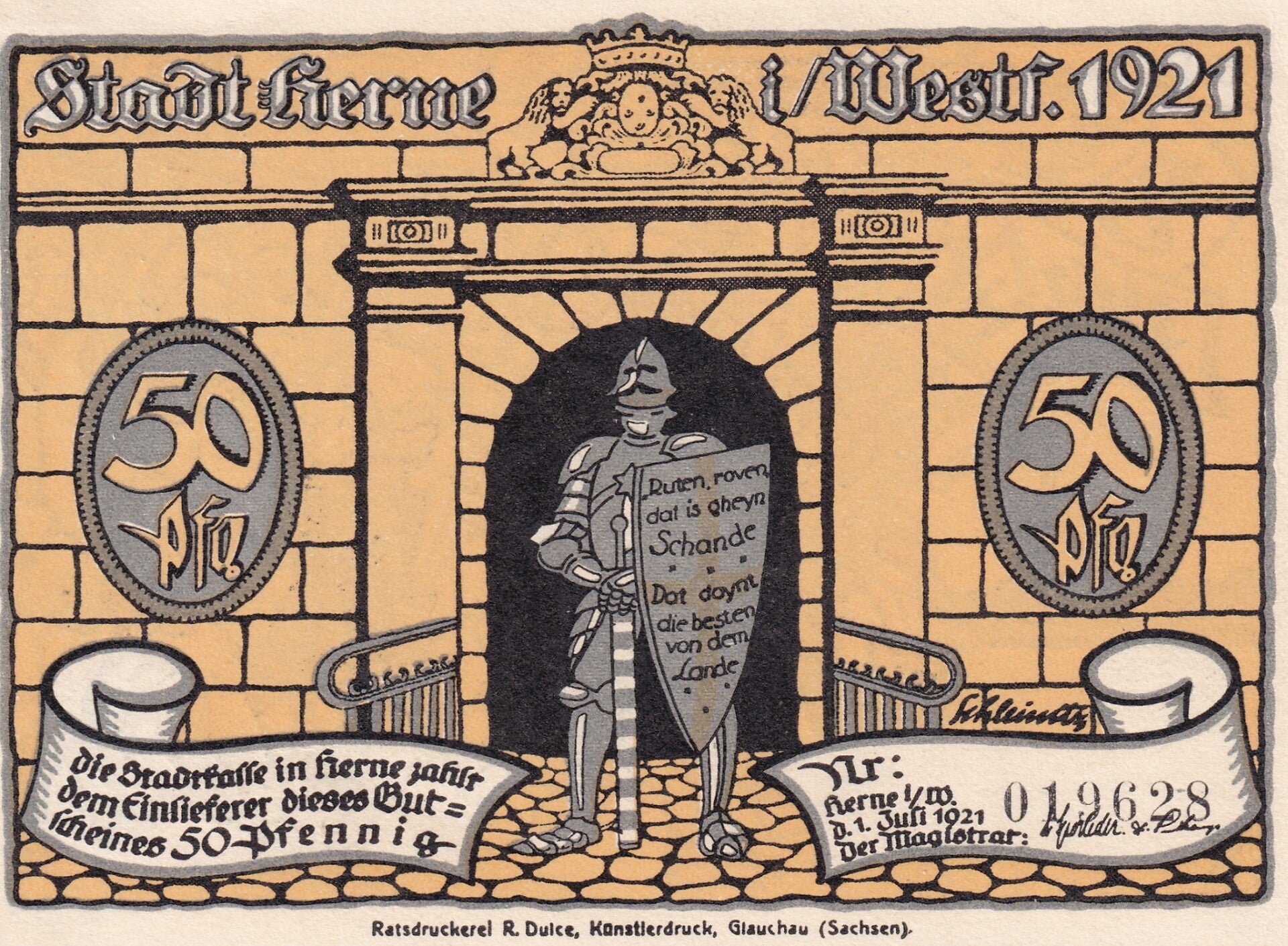
1921 German Notgeld 50 Pfennig note was issued by the City of Kerne (Stadt Kerne), Westphalia, during the profound economic disruption following World War I. With official Reich coinage in short supply, German municipalities produced Notgeld (emergency money) to maintain local trade—often commissioning richly illustrated designs that blended history, morality, and regional identity.
The front illustration portrays a dramatic medieval allegorical scene: a kneeling figure appeals for mercy as an armored knight on horseback confronts him. The composition emphasizes tension, judgment, and moral consequence, reinforced by bold diagonal lines and expressive movement. A flowing banner at the top contains poetic German verse, while the 50 Pfennig denomination is prominently displayed and integrated into the artwork. This scene reflects themes of justice, humility, and accountability—messages that resonated deeply in postwar German society.
The reverse design features a fully armored knight standing within a fortified city gate, holding a shield inscribed with a proverb written in regional dialect. The text reinforces ideals of honor, civic duty, and moral responsibility. Architectural brickwork, symmetrical oval denomination panels, and decorative scrolls give the note a balanced, formal appearance typical of high-quality Weimar-era Notgeld.