

1921 – German City of Kerne Notgeld 50 Pfennig
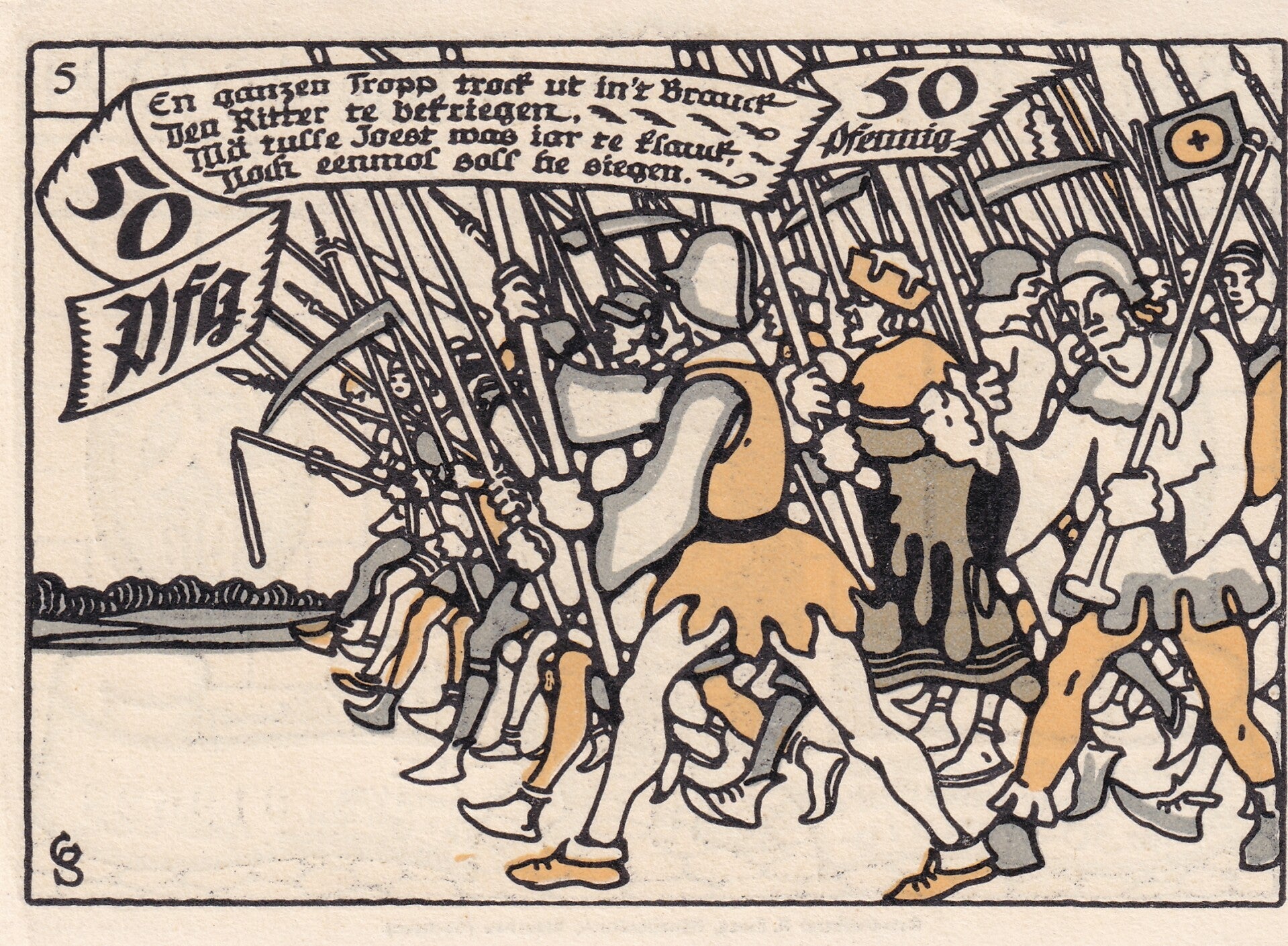
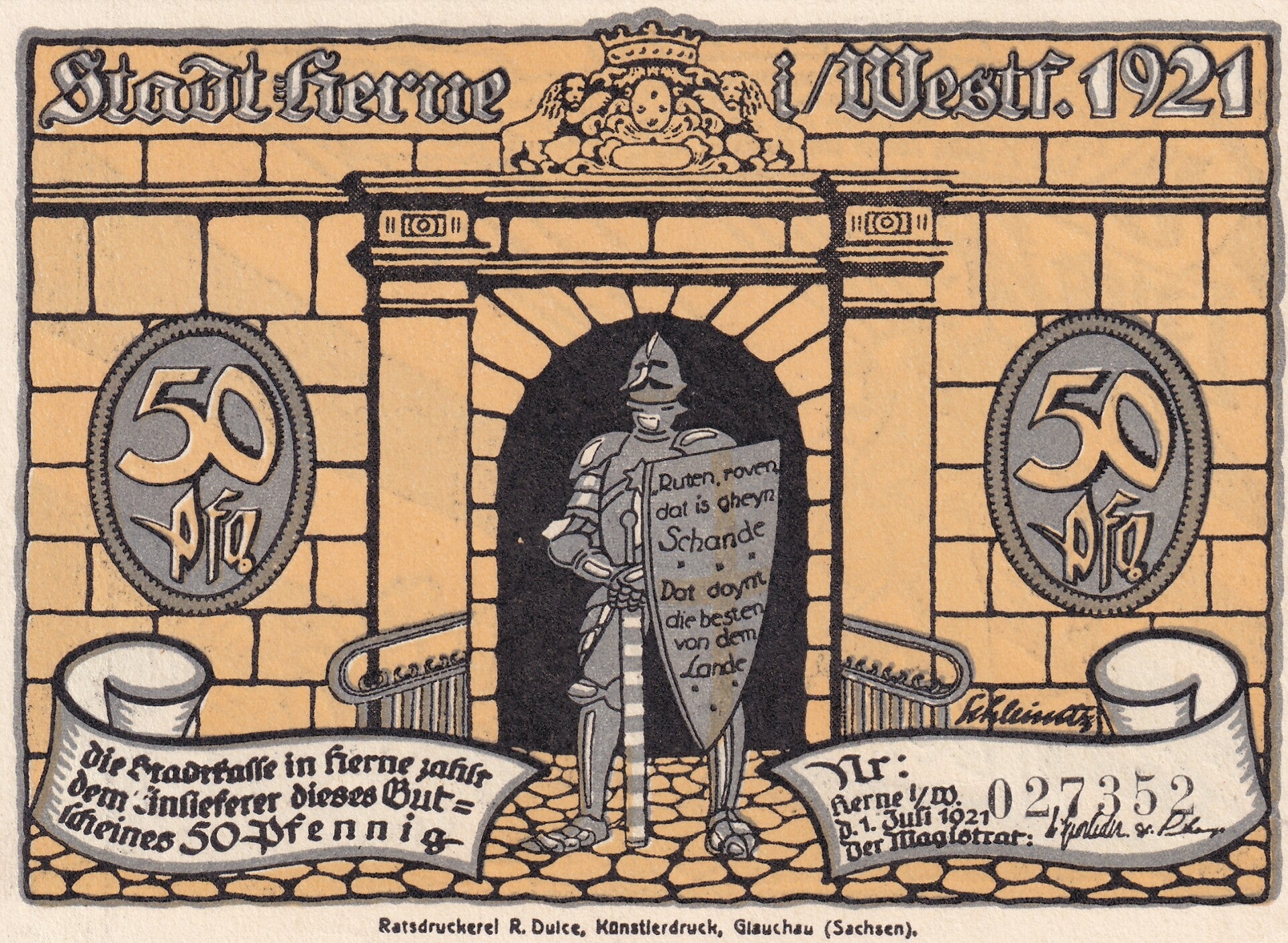
1921 German Notgeld 50 Pfennig note was issued by the City of Kerne (Stadt Kerne), Westphalia, during the intense economic hardship that followed World War I. With official Reich currency in short supply, municipalities across Germany produced Notgeld (emergency money) to sustain local commerce—often using the medium to convey powerful historical and moral narratives.
The front illustration shows a dramatic medieval-style scene of a determined group of townspeople advancing together, armed with farm tools and weapons. The tightly packed figures, raised implements, and strong forward motion convey unity, resistance, and collective strength. A flowing banner above contains poetic German verse, while the 50 Pfennig denomination is prominently incorporated into the design. This imagery symbolizes popular resolve and civic action, reflecting themes of solidarity and social justice that resonated strongly in postwar Germany.
The reverse design features a fully armored knight standing guard within a fortified city gate, holding a shield inscribed with a proverb written in regional dialect. The contrast between the marching populace on the front and the solitary knight on the reverse reinforces the note’s moral storytelling—balancing authority, accountability, and communal responsibility. Architectural brickwork, symmetrical oval denomination panels, and decorative scroll elements give the note a formal and authoritative appearance.