

1921 – German City of Merseburg Notgeld Pfennig Set
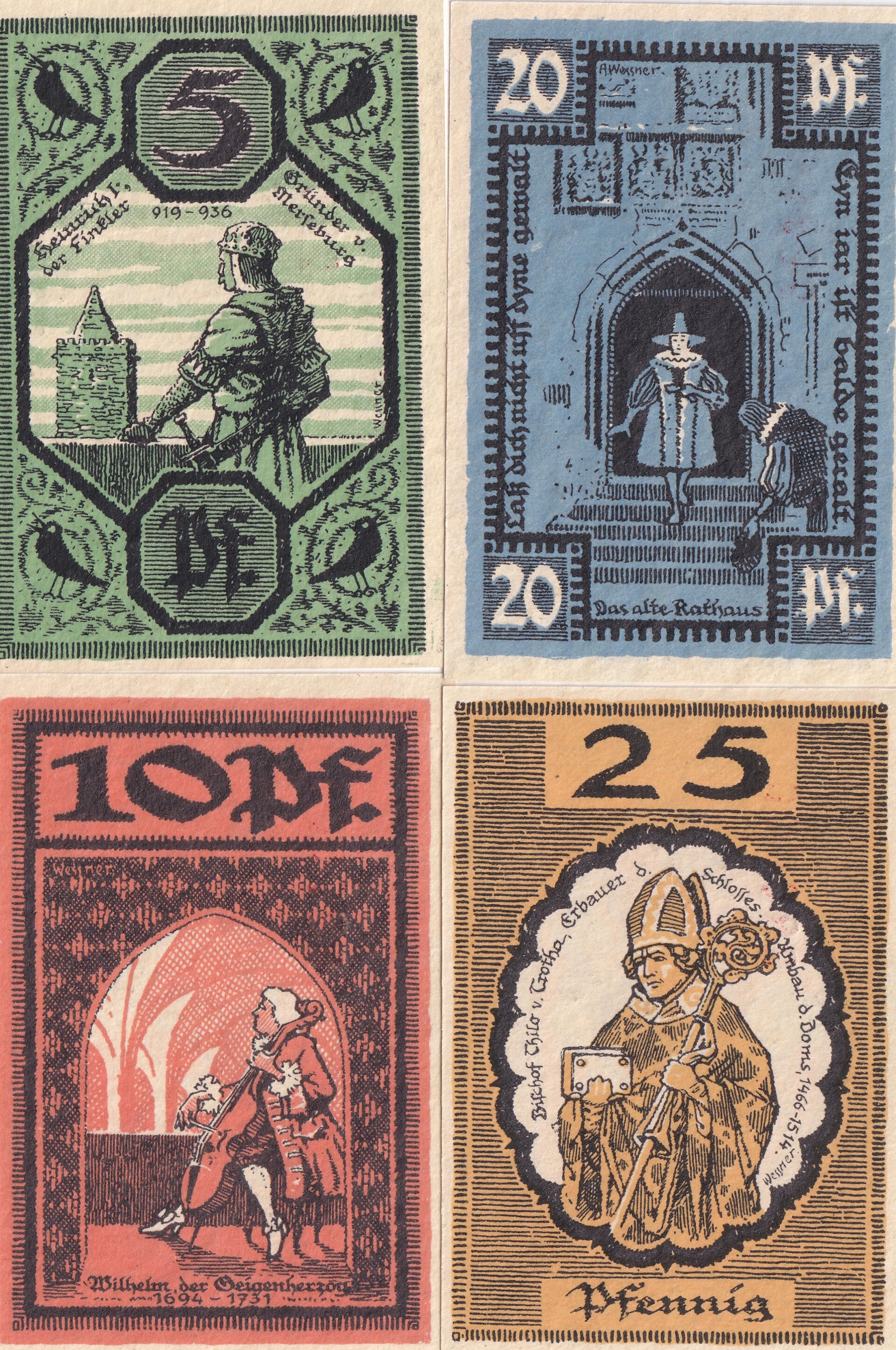
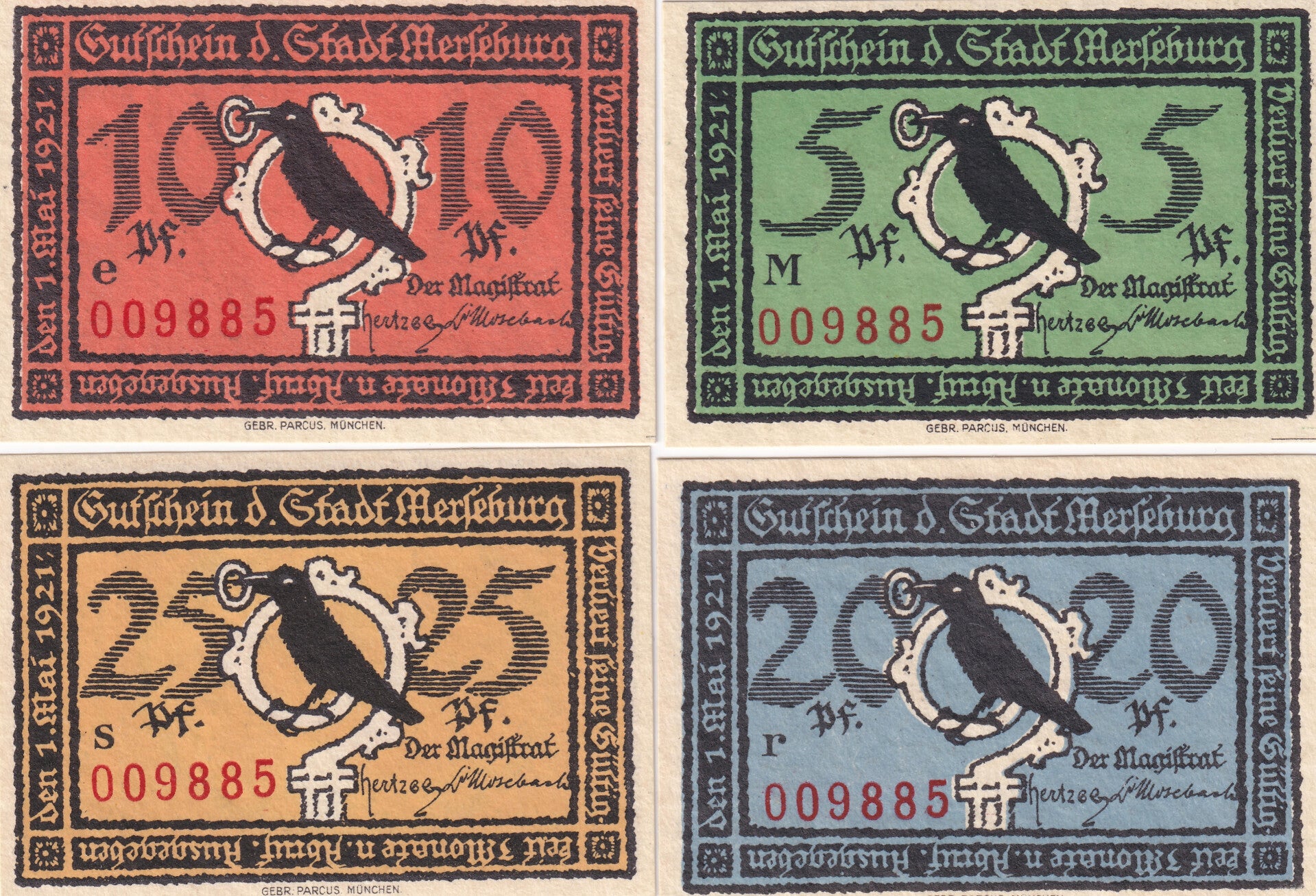
1921 German City of Merseburg Notgeld Pfennig set is an excellent example of early Weimar-era emergency currency issued during Germany’s post-World War I economic crisis. Produced by the City of Merseburg (Saxony-Anhalt), these colorful notes were authorized as Notgeld—local emergency money—during a period of coin shortages and monetary instability.
Issued on 1 May 1921, the set includes multiple Pfennig denominations (including 5, 10, 20, and 25 Pfennig), each printed in distinct colors for easy identification and public use. The designs are both artistic and symbolic, featuring bold typography, decorative borders, and central motifs that reflect civic authority and regional identity. Prominent inscriptions such as “Gutschein der Stadt Merseburg” (Voucher of the City of Merseburg) and official serial numbering add to their historical authenticity.
Printed by Gebrüder Parcus of Munich, a well-known German security printer, these notes were mass-produced yet visually striking, making them highly collectible today. Unlike imperial or Reichsbank issues, municipal Notgeld like this set offers a fascinating glimpse into how individual German cities responded independently to economic hardship.
This Merseburg Notgeld set is ideal for:
-
Collectors of German Notgeld
-
Weimar Republic and post-WWI historical collections
-
Paper money collectors seeking artistic and regional designs
-
Educational or museum-style displays
Key Banknote Details
-
Year Issued: 1921 (dated 1 May 1921)
-
Country: Germany
-
City: Merseburg
-
Denominations: Multiple Pfennig values (set)
-
Issuer: City of Merseburg
-
Printer: Gebr. Parcus, München
-
Type: Notgeld (Emergency Money)
-
Era: Weimar Republic / Post-World War I
These authentic 1921 Merseburg Notgeld notes remain a popular and affordable entry point into German paper money collecting, prized for their visual appeal, historical relevance, and strong collector demand.