

1921 – German City of Merseburg 5 Pfennig Notgeld Note
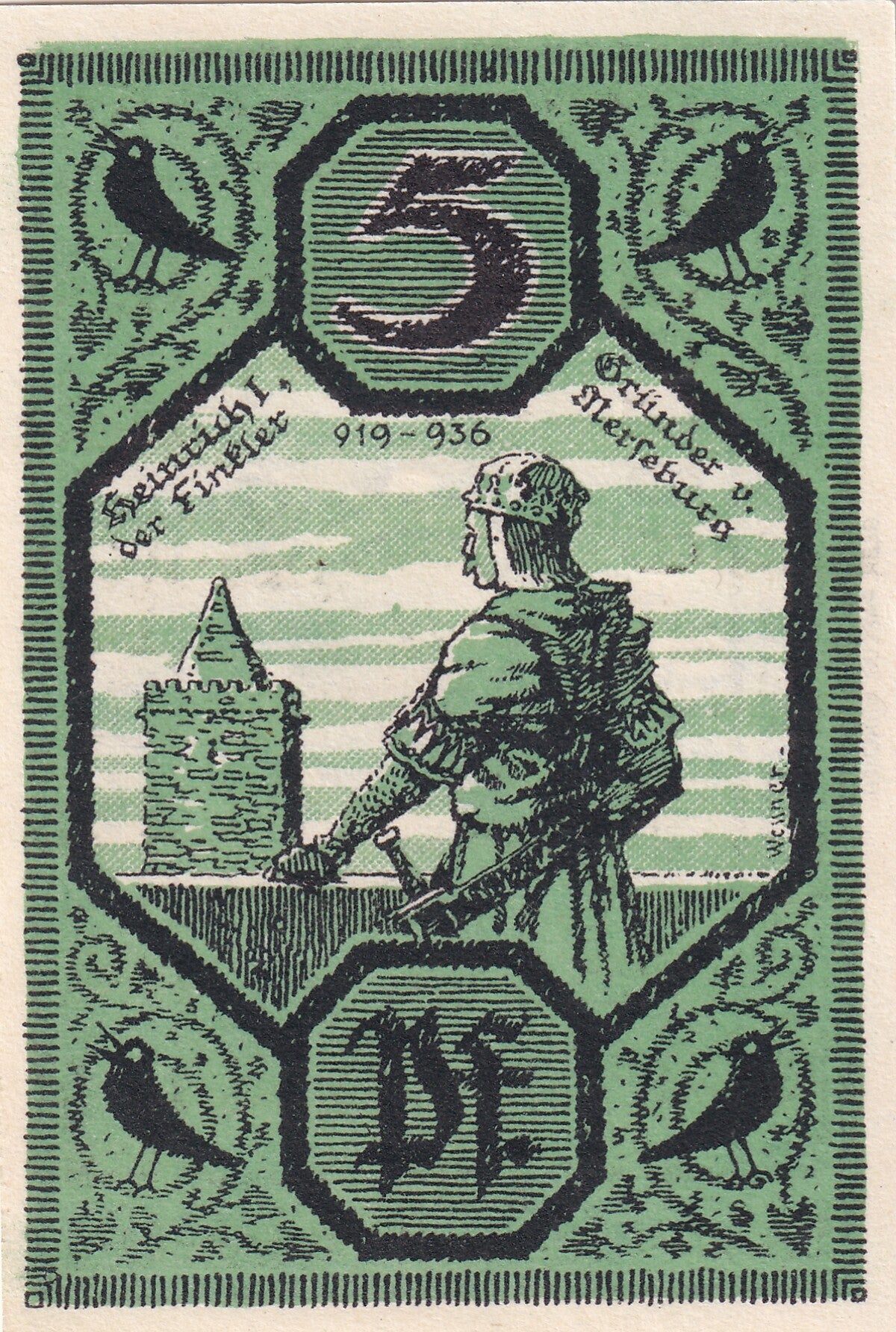
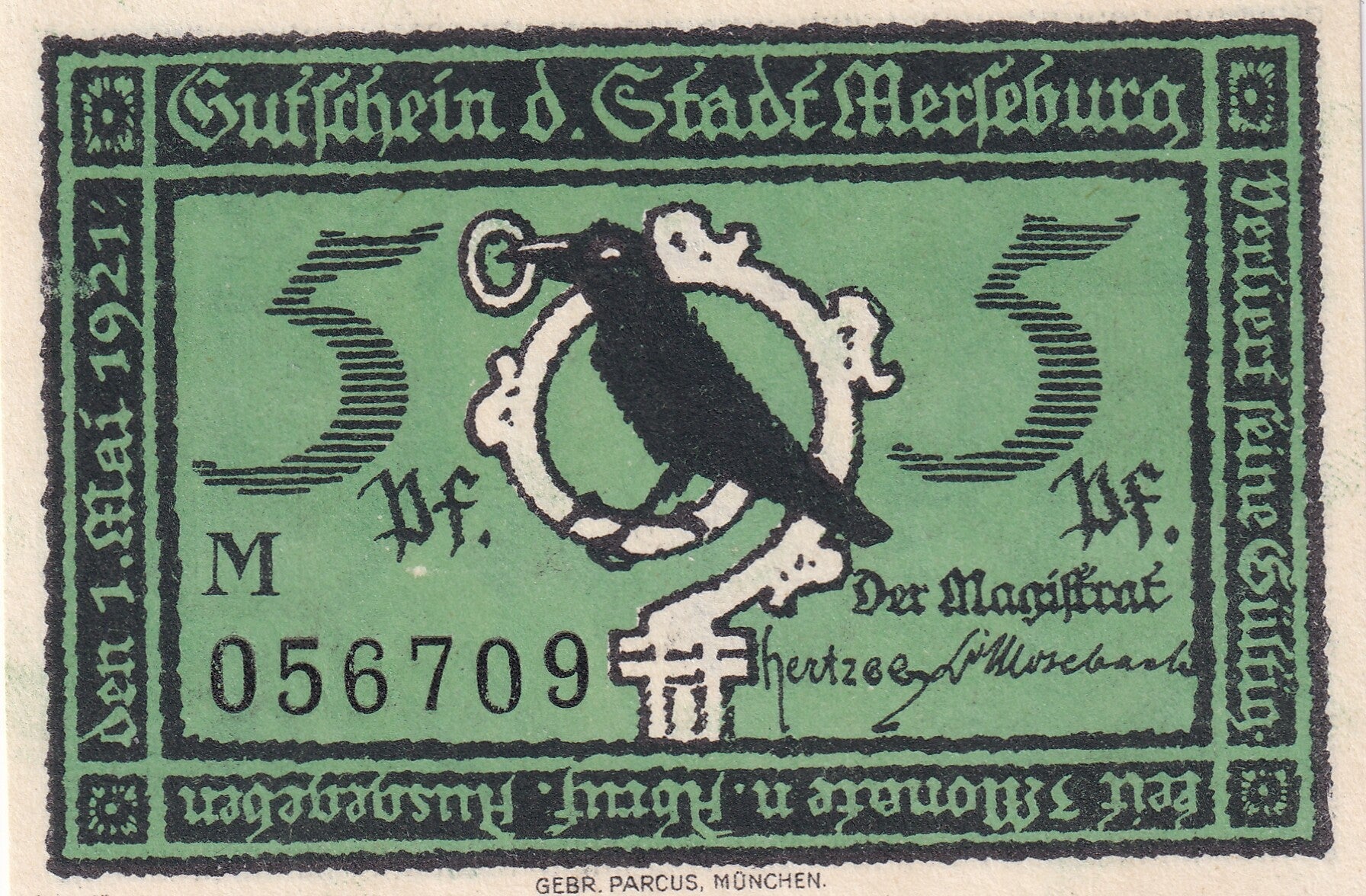
1921 German City of Merseburg 5 Pfennig Notgeld note is a striking example of Weimar-era emergency currency issued during Germany’s post-World War I economic crisis. Authorized by the City of Merseburg (Saxony-Anhalt) and dated 1 May 1921, this note formed part of a locally issued series designed to alleviate coin shortages and stabilize everyday commerce.
The obverse features a bold green color palette with a large central “5” denomination, flanked by stylized birds and decorative foliage. The central vignette depicts a medieval figure overlooking a fortified tower, referencing Merseburg’s long ecclesiastical and civic history. Inscriptions include historical references and Gothic-style lettering typical of early 1920s German Notgeld design.
The reverse displays the inscription “Gutschein der Stadt Merseburg” (Voucher of the City of Merseburg), with an emblematic black raven perched on a ring, a powerful regional symbol. The note carries an official serial number and the printed authorization “Der Magistrat”, confirming its municipal legitimacy. Printing was executed by Gebrüder Parcus, München, a respected German security printer of the period.
Unlike Reichsbank issues, municipal Notgeld such as this was intended for short-term circulation, making surviving examples valuable historical artifacts today. This note is especially appealing to collectors of German Notgeld, Weimar Republic currency, and illustrated emergency money.
Key Banknote Details
-
Year Issued: 1921 (dated 1 May 1921)
-
Country: Germany
-
City: Merseburg
-
Denomination: 5 Pfennig
-
Issuer: City of Merseburg
-
Printer: Gebr. Parcus, Munich
-
Type: Notgeld (Emergency Money)
-
Era: Weimar Republic / Post-WWI