

1921 – German City of Merseburg 10 Pfennig
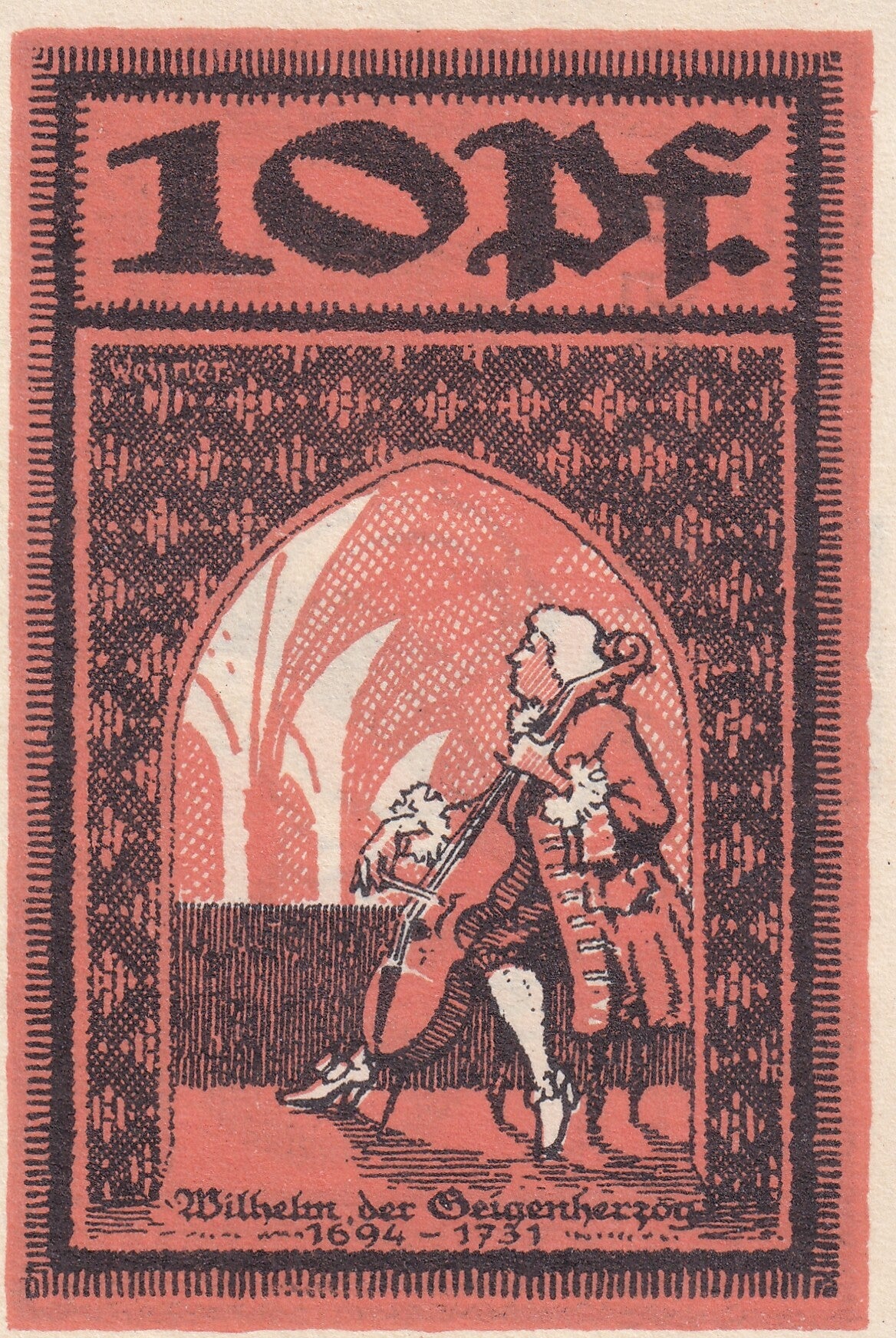
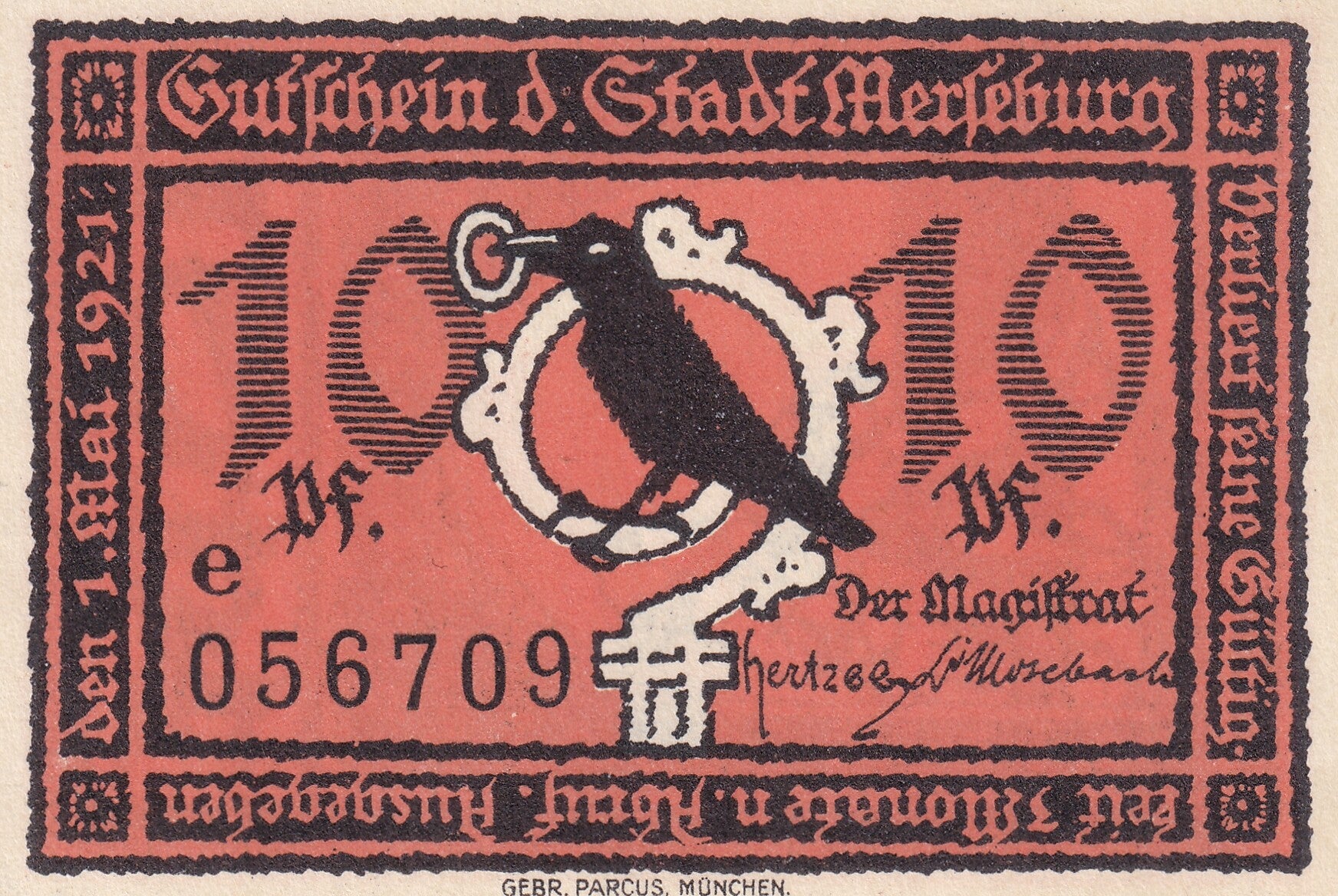
1921 German City of Merseburg 10 Pfennig Notgeld note is an outstanding example of illustrated emergency currency issued during Germany’s post-World War I monetary crisis. Authorized by the City of Merseburg (Saxony-Anhalt) and dated 1 May 1921, this note formed part of a colorful municipal series created to offset shortages of small coinage during the early Weimar Republic.
The obverse features a rich red-orange color scheme with a bold “10 Pf.” denomination at the top. The central vignette depicts Wilhelm, der Geigenherzog (William the Fiddler Duke, 1694–1731), shown playing a stringed instrument beneath a stylized arch. This historical and cultural reference reflects Merseburg’s artistic heritage and the storytelling tradition commonly found on German Notgeld issues of this period.
The reverse bears the inscription “Gutschein der Stadt Merseburg” (Voucher of the City of Merseburg) and prominently displays a black raven perched on a ring, a recurring heraldic symbol associated with the city. Additional elements include an official serial number, municipal authorization “Der Magistrat”, and the signature of the city treasurer. The note was printed by Gebrüder Parcus of Munich, one of Germany’s best-known security printers of the era.
Originally intended for short-term circulation, Notgeld notes like this were often redeemed and destroyed, making surviving examples desirable historical artifacts today. This Merseburg 10 Pfennig note is especially appealing to collectors of German Notgeld, Weimar Republic currency, and artistically illustrated paper money.
Key Banknote Details
-
Year Issued: 1921 (dated 1 May 1921)
-
Country: Germany
-
City: Merseburg
-
Denomination: 10 Pfennig
-
Issuer: City of Merseburg
-
Printer: Gebr. Parcus, München
-
Type: Notgeld (Emergency Money)
-
Era: Weimar Republic / Post-WWI