

1921 – German City of Merseburg 50 Pfennig
1921 German City of Merseburg 50 Pfennig Notgeld note is a visually striking example of higher-denomination emergency currency issued during Germany’s early Weimar Republic period. Authorized by the City of Merseburg (Saxony-Anhalt) and dated 1 May 1921, this note represents the upper value of the city’s municipal Notgeld series produced to combat widespread shortages of coinage following World War I.
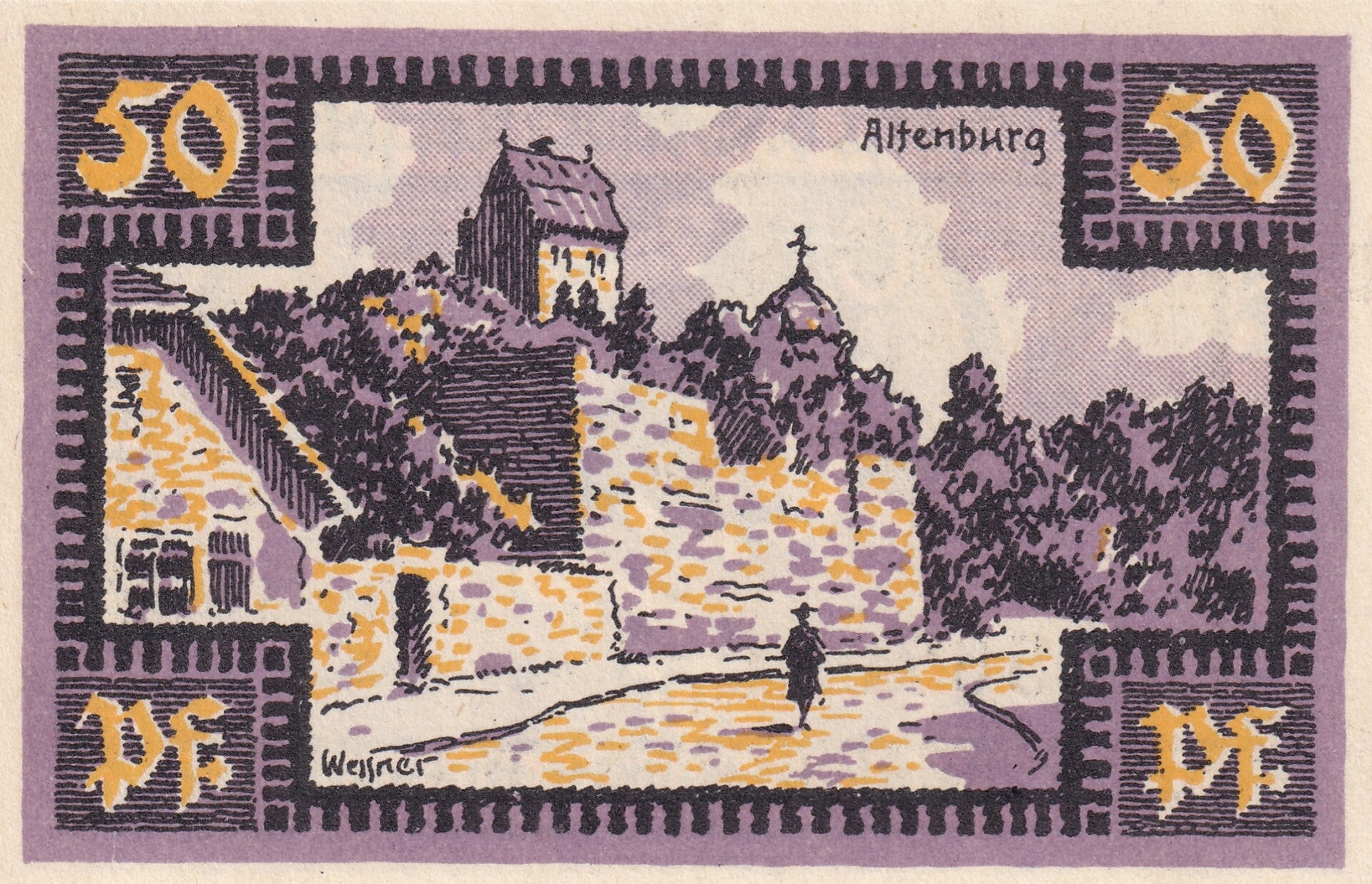
The obverse is printed in an attractive violet-purple and ochre color scheme and features a finely illustrated townscape labeled “Altenburg.” The scene depicts historic buildings, fortified walls, and a lone pedestrian along a curving road, rendered in a painterly style typical of artist-designed German Notgeld. The denomination “50 Pf.” appears prominently in the corners, framed by an ornate border that resembles contemporary postage stamp designs.
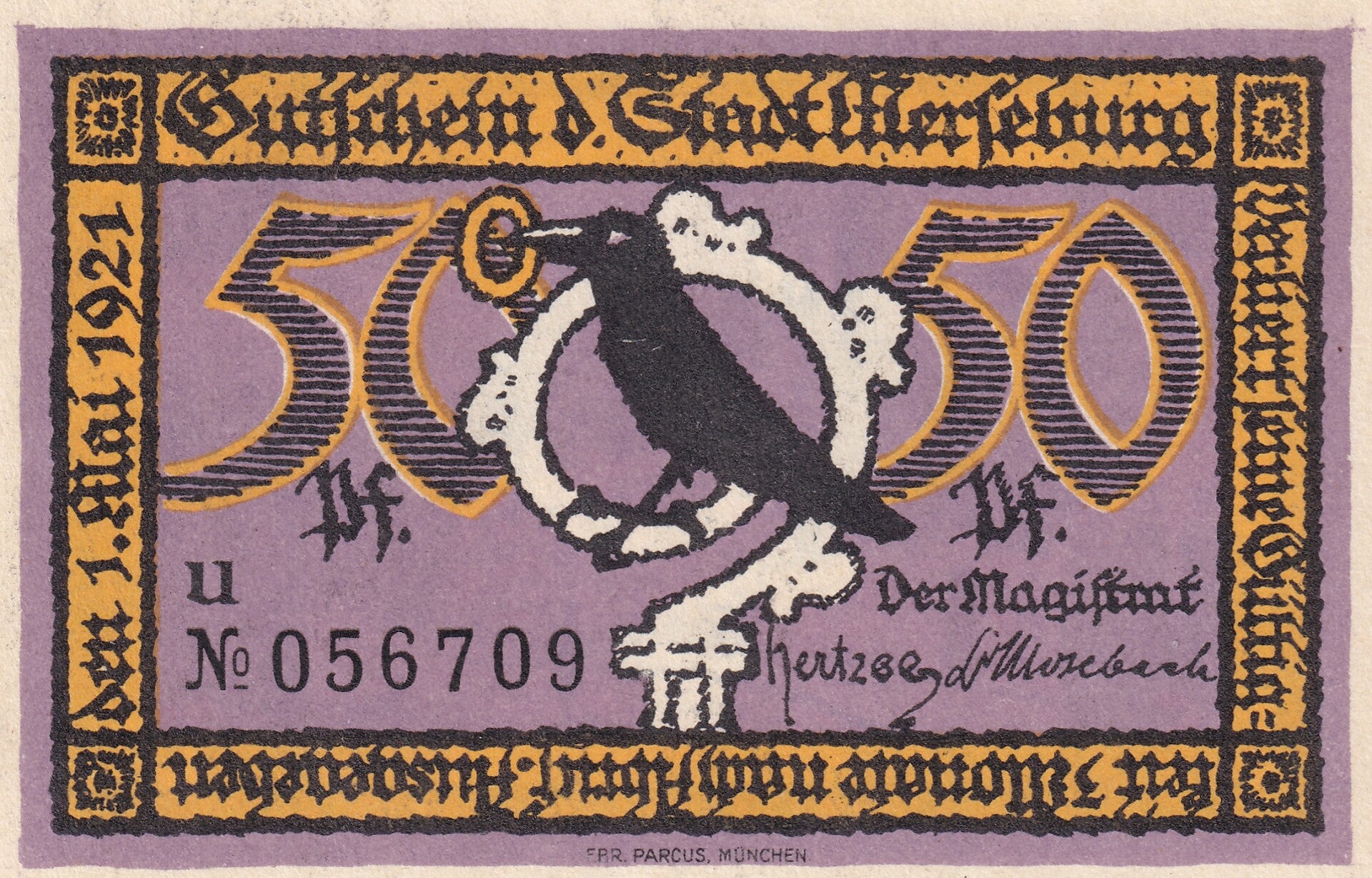
The reverse displays the inscription “Gutschein der Stadt Merseburg” (Voucher of the City of Merseburg) and prominently features the city’s recurring raven perched on a ring, a well-known heraldic symbol associated with Merseburg. Additional elements include an official serial number, municipal authorization “Der Magistrat,” and the signature of the city treasurer. The note was printed by Gebrüder Parcus of Munich, one of Germany’s most respected security printers of the early 20th century.
Because higher-denomination Notgeld notes saw heavier circulation and were frequently redeemed and destroyed, surviving examples—especially those with strong color and clean paper—are increasingly sought after. This Merseburg 50 Pfennig issue is particularly desirable for its artistic landscape design, larger format presence, and role as the highest value in the series.
Key Banknote Details
-
Year Issued: 1921 (dated 1 May 1921)
-
Country: Germany
-
City: Merseburg
-
Denomination: 50 Pfennig
-
Issuer: City of Merseburg
-
Printer: Gebr. Parcus, München
-
Type: Notgeld (Emergency Money)
-
Era: Weimar Republic / Post-World War I