

1921 – German City of Merseburg 50 Pfennig Notgeld “Herzog Christian” Note
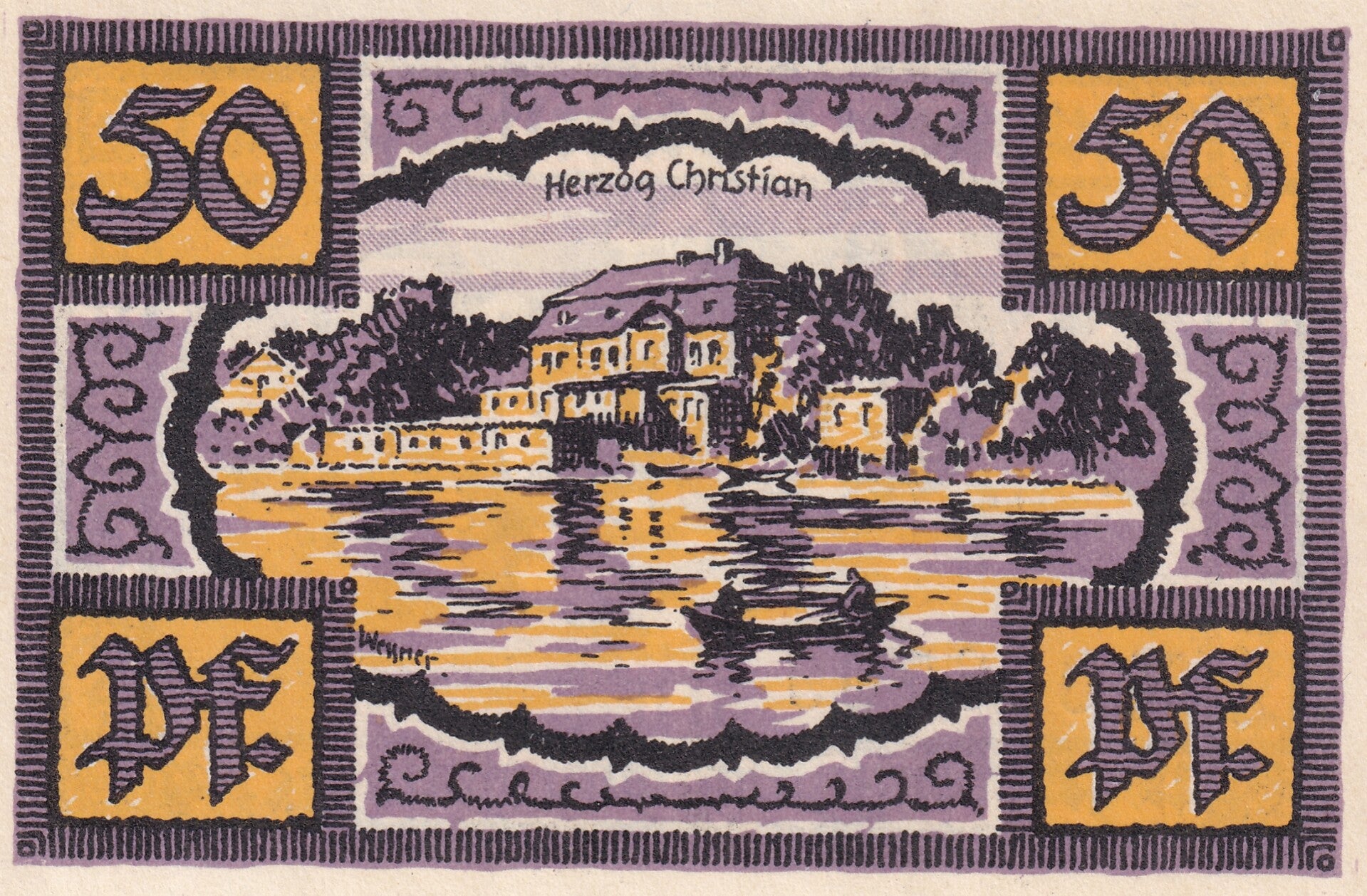
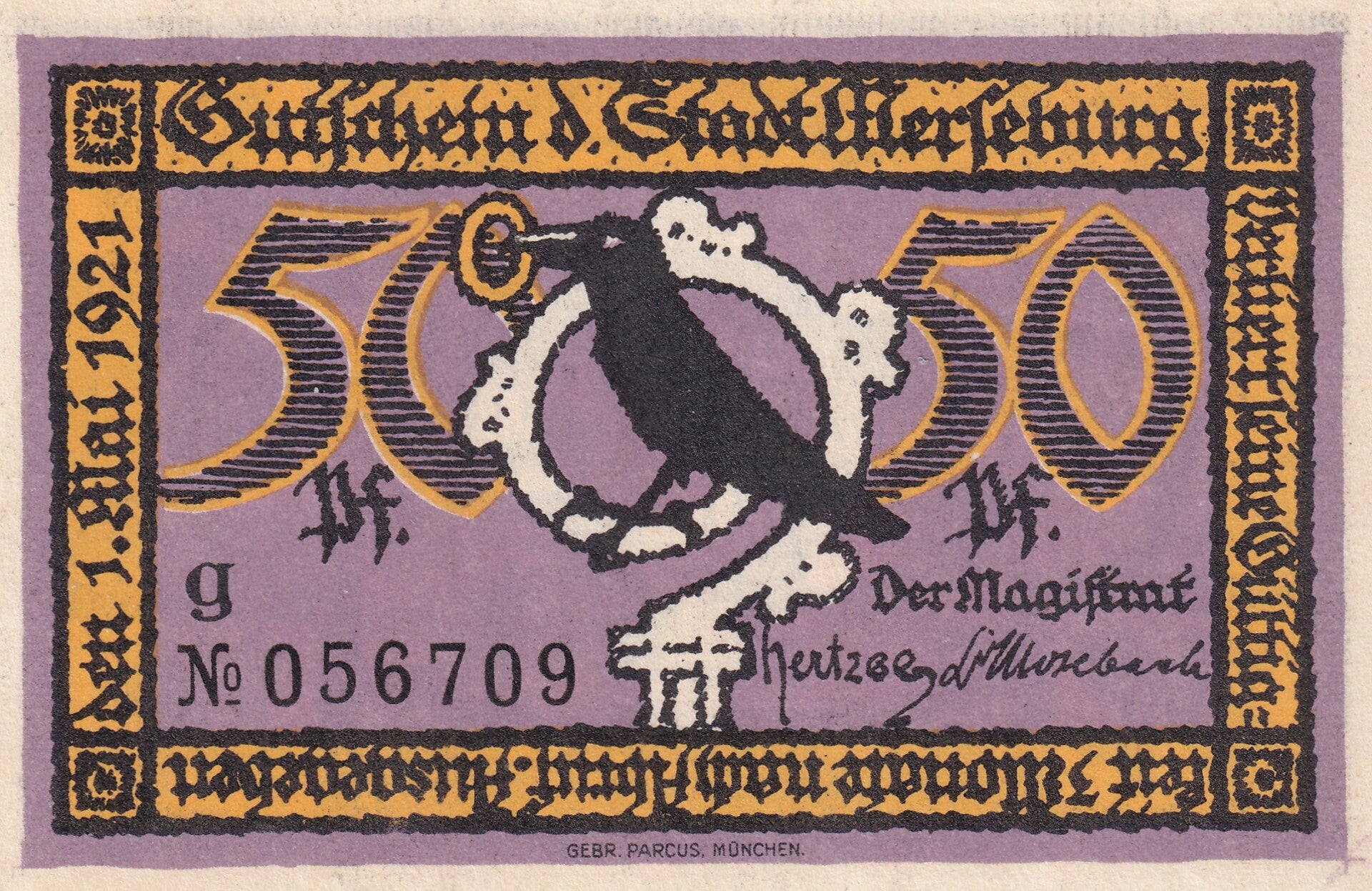
1921 German City of Merseburg 50 Pfennig Notgeld note is an exceptionally attractive example of artist-designed emergency currency issued during the early Weimar Republic period. Authorized by the City of Merseburg (Saxony-Anhalt) and dated 1 May 1921, this note formed part of a richly illustrated municipal series created to offset severe coin shortages following World War I.
The obverse features a vivid violet, ochre, and black color palette and presents a finely detailed riverside scene titled “Herzog Christian.” The illustration depicts historic buildings reflected in calm waters, with a small boat in the foreground, rendered in a painterly, almost postcard-like style. The denomination “50 Pf.” appears prominently in the corners, framed by ornate decorative borders characteristic of high-quality German Notgeld artwork.
The reverse displays the inscription “Gutschein der Stadt Merseburg” (Voucher of the City of Merseburg) and features the city’s familiar raven perched on a ring, a strong heraldic symbol repeatedly used throughout the Merseburg Notgeld series. Additional elements include an official serial number, the municipal authorization “Der Magistrat,” and the signature of the city treasurer. The note was printed by Gebrüder Parcus of Munich, one of Germany’s most respected security printers of the era.
Higher-denomination Notgeld notes such as this 50 Pfennig issue were more heavily circulated and often redeemed and destroyed, making well-preserved survivors increasingly desirable. This example stands out for its artistic composition, strong color contrast, and historical subject matter, making it a highlight within any German Notgeld or Weimar-era collection.
Key Banknote Details
-
Year Issued: 1921 (dated 1 May 1921)
-
Country: Germany
-
City: Merseburg
-
Denomination: 50 Pfennig
-
Issuer: City of Merseburg
-
Printer: Gebr. Parcus, München
-
Type: Notgeld (Emergency Money)
-
Era: Weimar Republic / Post-World War I