

1922 German City of Ochsenhausen – 50 Pfennig
1922, this German City of Ochsenhausen (Württemberg) 50 Pfennig Notgeld note is a vivid and highly collectible example of late-Weimar emergency currency. Produced during the peak of Germany’s inflation crisis, this municipal issue reflects both the economic hardship of the era and the remarkable artistic freedom embraced by Notgeld designers.
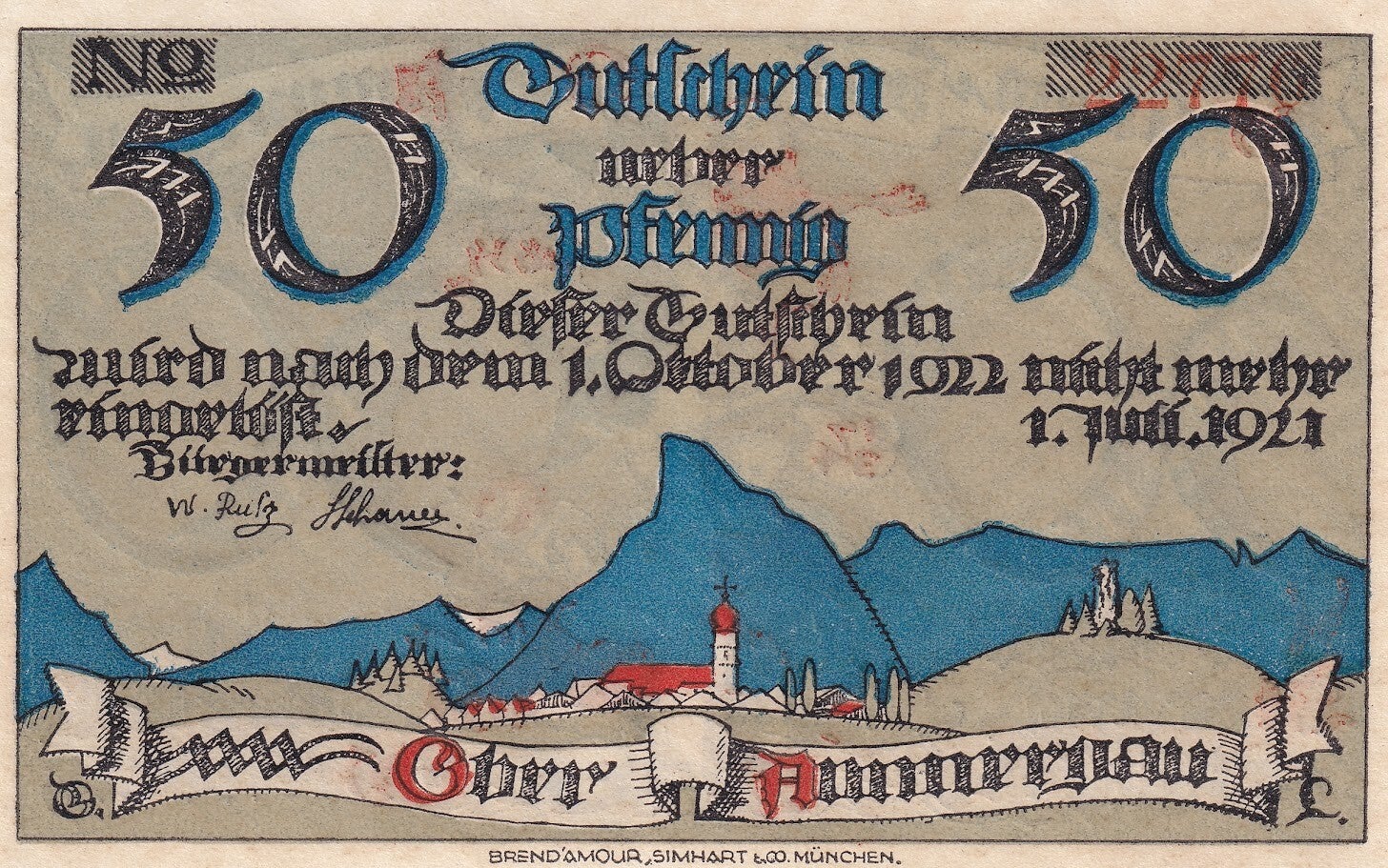
The obverse prominently displays the denomination 50 Pfennig in bold Gothic numerals, with the inscription “Gutschein über 50 Pfennig” confirming its function as a municipal voucher. The note is clearly dated 1. Oktober 1922, placing it in the final phase of small-denomination Notgeld issuance. A scenic panorama shows the town of Ochsenhausen nestled within a rolling Württemberg landscape, highlighted by a church with a red-topped tower and stylized blue mountains in the background. The blue, black, red, and grey color palette is both striking and distinctive.
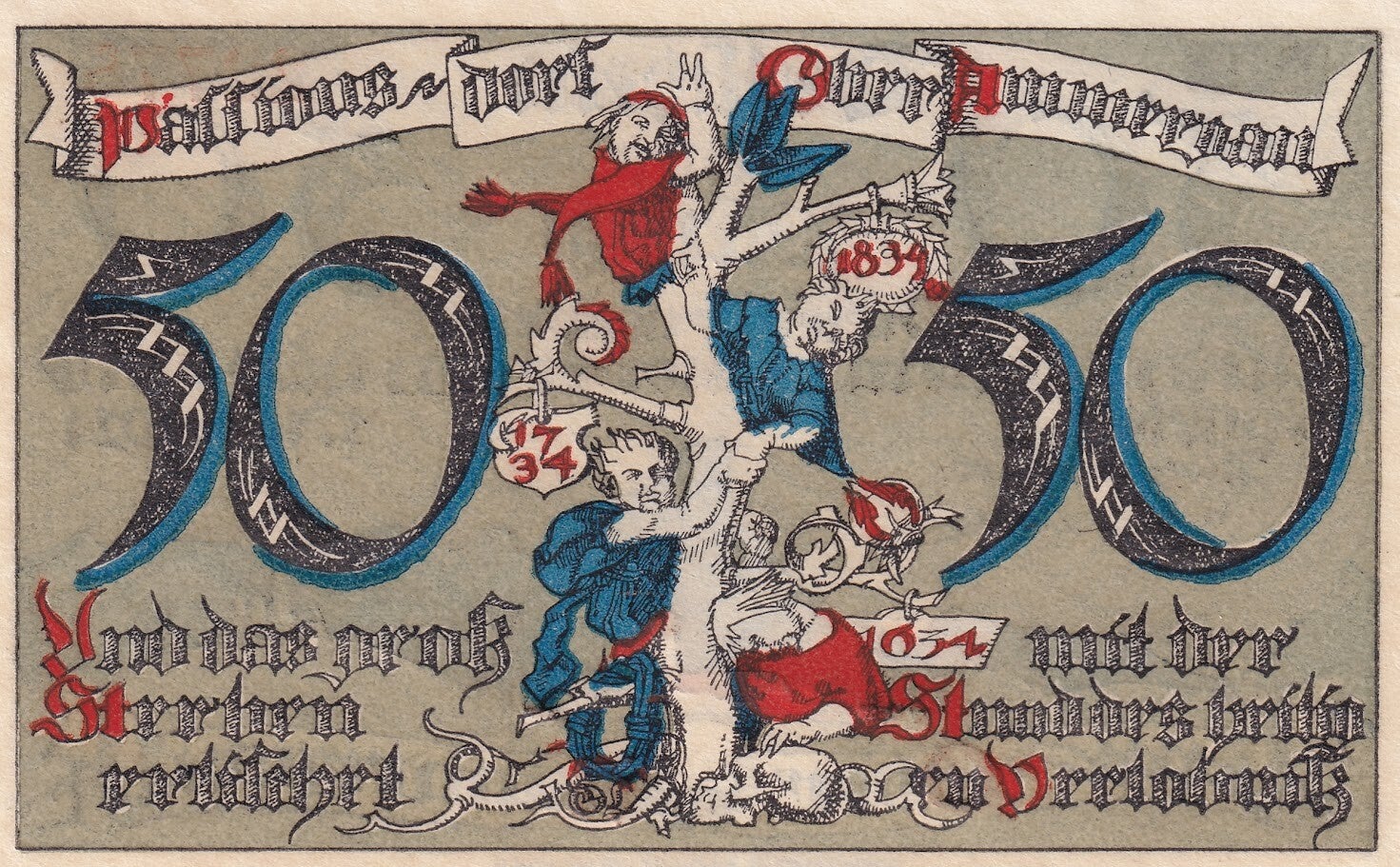
The reverse features an elaborate and symbolic illustration of figures climbing a central tree, each marked with significant historical years such as 1834, 1871, and 1918, representing pivotal moments in German history. This allegorical scene reflects themes of struggle, political change, and economic upheaval, making the note especially appealing to collectors of symbolic and narrative Notgeld. Gothic script text reinforces the dramatic visual impact and historical context.
Printed by Brend’Amour, Simhart & Co., München, this note exemplifies the high artistic and printing standards of German emergency money and is a standout example of illustrated Notgeld from Württemberg.
This 1922 Ochsenhausen 50 Pfennig Notgeld is ideal for collectors of:
-
German Notgeld (1914–1923)
-
Weimar Republic inflation currency
-
Württemberg municipal issues
-
Allegorical and historically themed paper money